
Balancing the Chaos!
- Jun 21, 2021
- 3 min read
(Because you cannot control what’s outside of you)

Being a classical dancer since I was a child, balancing came naturally to me. Until age caught up! With each passing year, I realized that, growing up, we need to spend some time on Balancing right (Be it Life or Yoga).
Loss of balance can leave you feeling a little scattered, clumsy, or stuck in your head. Yoga balance poses are an exceptional way to use your body, breath, and focus to ground yourself in the moment.

When you fall, whether it’s falling out of a pose on your mat or in daily life, quick reaction time is your key to preventing injury. You want your body to have the capacity for speed, allowing you to respond rapidly enough to catch yourself mid-fall or at least reduce the impact of the fall.
And since physical balance is something we need throughout our lives, we can start the practice of improving it at any time, regardless of age or yoga experience.

Asanas:
) Bird Dog Flow
In cat and cow, Inhale and extend your right leg and left arm. As you exhale bring your right knee and left elbow as close to each other as you can. Flow with your breath. Repeat this action 5 times. Change your hand and leg and repeat for five times on the other side. This is a yoga balance pose, so know that any wobbling and self-correcting is stimulating your proprioceptors, and is a sign of you getting stronger.


2. ) Low to High Lunge Flow (Anjaneyasana)
From Down Dog, step forward into a Lunge with your back knee down. As you inhale lift your back knee and hold for 5 breaths with your back knee lifted. Reach arms up overhead alongside your ears as you move in this flow.




3. ) Chair to Tree Flow (Alternate Legs)
From Mountain Pose, bend your knees to 90 degrees over your ankles, and keep weight equally distributed on your feet. Engage your lower abdominal muscles, as you reach your arms up and pull your arm bones back. As you exhale straighten your legs and directly lift your right leg for tree pose. Repeat on the left side.




4. ) Toe Lifts
We’re trying to strengthen a muscle called abductor hallucis by doing this. Place a block or book between the arches of your feet. Take a look at your feet and observe, without judgement: are one or both of you big toes angling far away from the block? On your inhale, lift and spread all your toes. On your exhale, keep them spread wide as you place them down on the mat again. As you do this, take special care to move your big toes as close to the prop at the center of the feet as you can. This can be a tough exercise, so have patience!




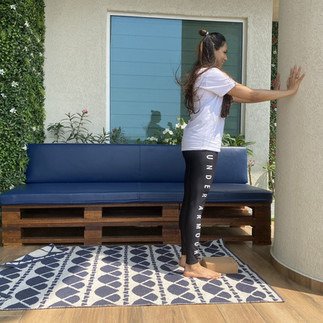
5. ) Heel Lift
Facing a counter, wall, or other sturdy surface, stand with your feet about hip’s width apart and parallel, and place your hands on your support. If you have a block, you can hug it between the thighs on its thinnest side. On your inhale, lift your heels directly up, and on the exhale slowly lower the heels. It’s common for the ankles to wobble at first. Imagine that there’s a magnetic attraction between your ankles, and practice lifting directly up and directly down at least 5 times.



6. ) Parsvottanasana
From samastih, step your left foot back about three feet, and spin your left heel down towards the center of your mat. Inhale, lengthen your spine, and look forward. Practitioners with sensitive low backs may stay here, or you may forward fold over the straight front leg, keeping your weight balanced through both feet. Hold for 5 breaths. Repeat on the other leg.

7. ) Warrior 3
From samastih, inhale and transfer your weight on your right leg as you lift your left leg until your body resembles ‘T’. If you find difficulty balancing here, take help of yoga blocks.

8. ) Utthita Trikonasana

9. ) Garudasana (Eagles Pose)
Shift your weight into your front leg and launching your back leg up, wrap it around, and over the front leg. Wrapping your arms together, reach up with your elbows going up towards the ceiling.

Kriyas
) Traatak
Traatak helps in improving focus and the ability to look at a point unwaveringly.
2. ) Bhramari
Balance requires a calm and uncluttered mind. Bhramari is an excellent tool to achieve this sense of equilibrium.
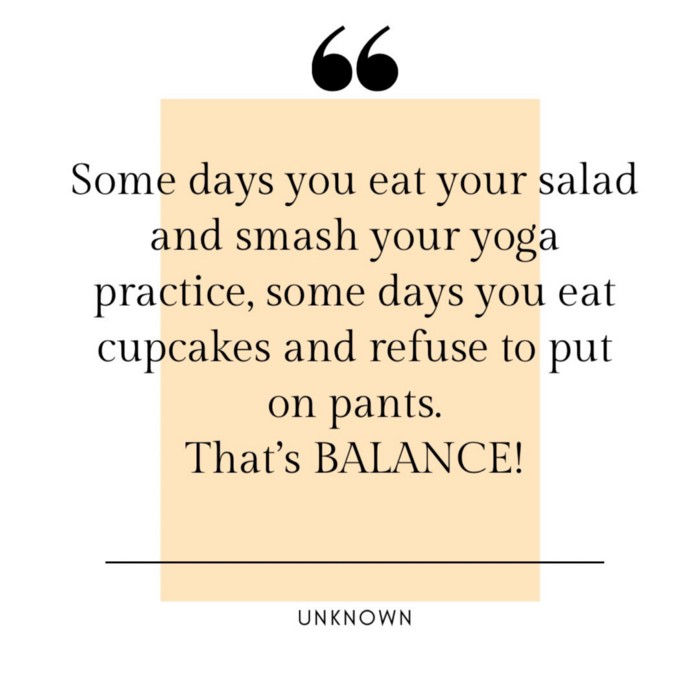
If none of these work, get that damn cupcake! Remember, that’s part of learning the art of balancing too.


Comments